
AI DEVELOPMENT SUPPORT
AI Implementation Support Service
We support the adoption of generative AI and LLMs end to end, from use-case selection through PoC (proof of concept) and production implementation to in-house development. We are a development company that runs generative AI in production, in both our own operations and our own products. Rather than “build it and walk away,” we work alongside you until AI takes root in daily work and produces results.
① Business Input
Inquiries, Docs, Data
What daily work produces
② AI Expands
Draft, Summarize, Analyze
Volume beyond human capacity
③ People Decide
Review, Judge, Approve
Choose in real-world context
④ Outcome
Work That Takes Root
Chosen for more than speed
AI expands the possibilities; your judgment turns them into results.
Find out which tasks it works for in a free consultation
CONSULTATIONS
Common AI Adoption Failures and the Consultations We Actually Receive
We hear from companies that are just getting started and from companies that have already adopted something. The latter come to us more often, and their concern is “it has not turned out the way we expected.” The cause is not the AI’s performance but how it is built into the work.
Rollout and Adoption
We rolled out AI company-wide, but employees have divided into those who use it and those who do not
Our Approach
A rollout that hands licenses to the whole company starts without identifying “the tasks where using it delivers results,” so only some people use it and the remaining licenses become a fixed monthly cost. The less it is used, the more staff on the ground start using outside AI services through personal accounts, and unmanaged use (shadow AI) spreads as well.
Before adding seats, we decide on one task where AI delivers results and build AI into it. We track usage and design so that any part that goes unused can be wound down.
We adopted an AI platform, but it is not being used on the ground
Our Approach
General-purpose platforms may run well in a demo, but they are not built into your actual workflows or existing systems. Staff on the ground will not change how they do their work just to use one, so only a large monthly fee remains.
Rather than asking your team to learn a new tool, we build AI into the business systems and workflows you already use. We design on the premise that the way work is done on the ground does not change.
We got as far as a PoC (proof of concept), but could not get past the barriers of accuracy and operations, so it has not taken root
Our Approach
A PoC (proof of concept) is a place to confirm that something “works,” but what production needs is accuracy assurance, access control, audit logs, and handling of exceptions. If you try to move to production with a build made only for validation, it stalls right there.
We design on the premise of building in accuracy evaluation, access control, and audit logs, and we work alongside you all the way to setting up the framework for production operations. At the PoC (proof of concept) stage, we identify the requirements that will be needed afterward.
Data and Security
We do not want to hand over customer data or source code to external AI services
Our Approach
Source code developed at great expense in the past, along with design and strength-calculation data, is the very core of your competitive strength. With a setup that sends it to an external AI service, you may be unable to satisfy internal regulations or confidentiality obligations to business partners, even where the contract says it will not be used for training.
As an option, we design setups that keep data inside your company (a local LLM or a closed network). In the operations of our own product, we also run a setup that switches between cloud AI and a self-managed environment for each feature.
We are worried about the security of the AI app we built
Our Approach
In an app with AI built in, new paths appear on top of conventional access control: information no one intended can be drawn out through prompts, and even data that was never meant to be referenced can end up mixed into responses.
We build access control, audit logs, and control over what data the AI can reference into the design from the start. We govern who can reach which data, including through the AI’s responses.
Cost and Investment Decisions
Monthly API costs keep piling up, but the return does not justify the spend
Our Approach
Costs rise the more the AI is used, but you cannot see how much each feature costs, so you cannot tell where to cut. As a result, you keep paying for features that deliver little.
We build in a mechanism that measures AI costs for each feature, and we use different models for different purposes. We set things up so that any feature that is not delivering results can be switched off.
We are asked for an initial investment of several million yen before we know what results to expect
Our Approach
With AI, you cannot predict the results until you try it. If you are asked for the initial investment up front at that stage, the burden on the client tends to grow.
We have a co-creation approach in which we share both the results and the risk with you. The fee structure differs by project, so at the first consultation we will propose the structure that suits your company. Please start by talking with us.
Results and Dependence
AI has made it faster to create documents and proposals, but the content is similar to other companies’ and does not lead to orders
Our Approach
If you leave the work to a general-purpose model, everyone who uses it ends up with similar output. You gain faster creation and effort savings, but you lose the reason to be chosen.
By maximizing human involvement, we make the AI output unique and original. People weave in your track record and on-the-ground insight, and we design to the standard of whether the result leads to orders, not whether it can be made quickly.
We do not want our work or our company to depend on a specific third-party AI such as ChatGPT or Claude
Our Approach
Dependence grows not only on the model but at the same time on prompts, on how data is held, and on the evaluation setup. By the time you notice, the cost of switching has become large.
We set things up so the model can be swapped out, and we leave the prompts and evaluation data with you as your assets. We arrange things so that a spec change or price revision by a specific third-party AI provider does not bring your business to a halt.
REASONS
3 Reasons Clients Choose Us as an AI Implementation Support Partner
A Development Company Whose Own Development Process Runs on AI
We do not produce consulting documents; every day, we run AI that actually works. The business system we use to manage our own contract development has many AI features built in, including estimates, task design, meeting minutes, Japanese–English translation, and root-cause analysis of failures, and they run as part of our everyday work. Because we know both sides, as “users” and as “builders,” we can design around what becomes a problem in production operations.
01
You Can Also Choose a Setup That Keeps Data Inside Your Company
In addition to using cloud AI, we can design setups with a local LLM (LLM operations in an environment you manage yourself) or on a closed network. We also put into practice an approach that switches between cloud AI and a self-managed environment for each feature in our own product. We support you with implementation know-how refined in production operations, from measures against wrong answers using RAG to making AI costs visible for each feature. As an ISMS-certified company, we put your data-handling requirements first when selecting a setup.More about local LLM setup and implementation support
02
A Co-Creation Fee Structure That Shares the Risk
With AI, you cannot predict the results until you try. That is exactly why we offer a co-creation approach in which we share both the results and the risk with you. If you do not get results, we do not earn revenue either. Because we pursue the same outcome as you, we will propose a fee structure that suits your company at the first consultation.
03
PHILOSOPHY & FLOW
Our Philosophy on AI Adoption and How We Put It into Practice
AI expands, people compress.
AI Is Orders of Magnitude Better as an Expander
AI never tires, never forgets, and keeps processing hundreds of items at the same quality. It works across more material than a person could ever read, lays out the options, and prepares drafts. It can widen the material for judgment to reach areas that people physically could not.

People Are Orders of Magnitude Better as Compressors
The human brain receives information equivalent to tens of millions of tokens per second, discards most of it, and keeps only the meaning. The mood on the ground, the hesitation in the other person’s voice, the feel of a past failure. In an instant, it compresses information that has not been put into numbers and turns it into judgment. Woven into that judgment are the experience and values the person has built up. That is why work that has passed through human judgment carries an originality that only your company has.
One week until the first AI agent is running. One more week to run the “AI expands, people compress” cycle and measure the impact. We then spread the patterns that prove effective across the organization while adding more agents.
Analysis of Current Challenges and a Demo of Working AI
We take stock of your workflows and identify where your people are being worn down and which tasks AI can help with. At the same time, we show you the AI tool we developed ourselves and use every day to manage our contract development: about 20 types of AI agents running in real work, on screen. Along with the analysis, this gives you a picture of “what if this were our own work,” and we then decide together which agent to run first.
See it working before anything is built: that is where our process starts
Get Your First Agent Running
For the one task selected, we build your first AI agent on your real data. In one week, we launch one agent that actually works inside your daily work, not a stand-in built only for validation.
One week later, AI is running inside your business
Run the “AI Expands, People Compress” Cycle and Measure the Impact
Staff on the ground use the agent that has started running, and people judge the options that AI has broadened. We keep this cycle turning for one week. We turn effort savings, accuracy, and cost into measured figures, and you decide whether to continue or expand.
Deciding not to move forward is also an option
Horizontal Rollout: More Agents and More People Who Use Them Well
We take the pattern whose impact has been confirmed and roll it out to neighboring tasks. Because each new agent is built on the foundation created for the first one (access control, audit logs, and cost measurement), start-up is faster from the second agent onward. In parallel, we develop the people who can use agents well, through the preparation of prompts and workflows, the drafting of usage guidelines, and study sessions. We recreate inside your company the path along which we ourselves grew to about 20 types of agents in our own tool.
What grows is the number of agents and the number of people who use them well; with both in place, it becomes a system for the whole organization
POC TO PRODUCTION
From AI PoC Support Through the Transition to Production Operations
The most common consultation about AI adoption is a PoC (proof of concept) that is finished but cannot move on to production operations. We run about 20 types of AI agents in production on our own business system, so we design from the start around what becomes a problem when a PoC moves into production.
PoC Scope and Duration
Steps 1–3 of our process make up the PoC (proof of concept). It takes one to two weeks for the current-state analysis and the working-AI demo, one week to build the first AI agent, and one week to measure the impact. About one month after your first consultation, you have in hand one agent running on your real data, together with its measured results.
Criteria for Deciding to Move to Production
We turn the three factors of accuracy, effort savings, and cost into measured figures, and you decide whether to continue, expand, or stop. Starting with the tasks where the results have been confirmed, we build the agent into your live operations and then roll it out to neighboring tasks. Deciding not to move forward is also an option.
Design That Prevents Stalling at the PoC Stage
We build the first agent not as a stand-in for validation but as something that actually works inside your daily work. Because the foundation for access control, audit logs, and cost measurement is put in place with the first agent, nothing has to be rebuilt when you move to production, and start-up is faster from the second agent onward. We work alongside you through operations design and in-house development support.
For PoC (proof of concept) and MVP (minimum viable product) development to test hypotheses for a new business, the PoC/MVP Co-Development page explains how we work and what we cover.
FOR & PRICING
What AI Implementation Support Covers, and How Fees Work
With AI, it is hard to promise results in advance. An initial investment made before the results are known tends to be a heavy burden for the client. That is why we chose an approach in which we share the results and the risk as far as we can. Depending on the nature of your consultation, the approach and the fee structure differ as follows.
PLAN A
Co-Creation Model
When AI is used to create business growth and revenue
- We do not charge fees from the first consultation through production implementation (use-case selection, PoC, and production implementation)
- A monthly usage fee once operations begin
- Plus a revenue share scaled to the size of the business
Fees are incurred only after results appear. We are not merely supporting you from the outside; we are in the position of pursuing the same results you are.
PLAN B
Contract Development Model
When the benefit shows up as cost reduction or freed-up time, as with improving internal efficiency
- An estimate based on requirements and scale
- A staged start, beginning with validation of a small use case
- Proposals that include the use of subsidies
In areas where revenue sharing does not work, we proceed as conventional contract development, starting from the range where the return on the investment can be foreseen.
SUBSIDY
We Also Support AI Adoption That Makes Use of Subsidies
Subsidies such as the IT Introduction Subsidy are difficult to assess in terms of eligibility requirements and application timing, and they call for a design that looks ahead to implementation after approval. We work with companies that support subsidy applications, and we have a track record of many approved applications. From judging whether you can apply through system implementation and operations after approval, we can carry everything forward in one continuous flow.
It is fine if you are still at the “we are not sure whether we can use one” stage. In our consultation, we start by answering whether you could be eligible.
Co-Creation or Contract Development? Get a Free Consultation on the Approach That Suits Your Company
We will also tell you whether a subsidy can be used. It is fine if your requirements are not yet settled.
Get a Free ConsultationTRACK RECORD
AI Development and AI Adoption Track Record
Frequently Asked QuestionsFAQ
How much does AI adoption cost?
Costs vary widely depending on the nature of the consultation and how we proceed, so we do not offer a uniform price list. There are two ways of working: a co-creation model in which we pursue results together with you, and a contract development model based on an estimate. At the first consultation, after learning about your situation, we propose individually which one suits your company and what shape the fees take. Consultations are free. To get started, please feel free to contact us.
Can we get help even if our goal is to improve internal work efficiency?
Of course. Improving work efficiency also contributes to sales and profit, through cost reduction and greater productivity. However, it is difficult to separate that contribution out and measure it as revenue, so we basically proceed as contract development based on an estimate that reflects your requirements and scale. If we can measure effects such as effort savings together and agree on how to treat them, we may also take the project on under the co-creation model. A subsidy such as the IT Introduction Subsidy may also be available, so please include that question in your consultation.
Can we request help with only the selection of an off-the-shelf AI tool?
Yes, we can. After sorting out intended use, accuracy, cost, and security requirements, we can support you with just the comparison and selection of off-the-shelf AI tools. We do not start from a particular tool; we select based on whether it fits your work. That said, where we are strongest is AI development that keeps AI running inside your business and products. If you want to look beyond selection to implementation, operations, and in-house development, you can talk to us about all of it in one go.
The generative AI tool we already adopted is not being used. Can we ask for help getting it back on track?
Yes. Many of the consultations we actually receive are about getting things back on track after adoption. We begin by reviewing how the tool is used and your workflows, and identifying again the tasks where it delivers results. Our proposals also cover sorting out features and licenses that are not being used, and reviewing your dependence on external AI services and how data is handled.
How long does it take to see results?
As a guide, allow one to two weeks for analyzing your current challenges and the working-AI demo, one week until the first AI agent is running, and one week to measure the impact. About one month after your first consultation, we show you accuracy, effort savings, and cost as measured figures, and you can decide whether to continue or expand. After that, we roll out the pattern whose impact has been confirmed and increase the number of agents.
Can AI be adopted for work that involves confidential data?
Yes. We can design for this, including setups that do not use cloud AI and do not send data outside your company (a local LLM, or AI operations in an environment you manage yourself). We hold ISMS certification (ISO/IEC 27001) and put your data-handling requirements first when selecting a setup.
Is a local LLM (AI operations in a self-managed environment) also supported?
Yes, we can. We can design and build LLM operations in an environment you manage yourself, or on a closed network, so that data is not sent to an outside AI provider. We also run a setup that switches between cloud AI and a self-managed environment for each feature, in production in our own product. Taking into account intended use, accuracy, cost, and security requirements, we start by deciding together with you how much should be kept in-house.
Which AI models are used?
We do not start from a particular model. We select the optimal model and configuration according to intended use, accuracy, cost, and security requirements. Comparing multiple models can also be done within the PoC (proof of concept).
Is it possible to guard against wrong AI answers (hallucinations)?
Yes. We implement safeguards that keep wrong answers from becoming a business risk, using methods we have developed in our own production operations. These include backing answers with RAG (a mechanism that has the AI refer to your internal data as its basis), a mechanism that checks answers against real data, and a design that hands off to a person when the AI is not confident.
Is it all right if no one in our company knows much about AI?
That is not a problem. Our service includes operations design after adoption and in-house development support, and we work alongside you with the goal of getting your team to a self-sustaining state. We also support the preparation of prompts and workflows and the drafting of usage guidelines.
Can subsidies be used for AI adoption?
Depending on the nature of the project, a subsidy may be available. We work with companies that support subsidy applications, and we have a track record of many approved applications. From judging whether you could be eligible through system implementation and operations after approval, we can support you in one continuous flow.
Can small and medium-sized businesses also request help with AI adoption?
Yes, of course. We give small and medium-sized companies our full support with AI adoption. Rather than building a large system from the start, we take an approach of choosing one task where results are expected and starting small, which also keeps the burden of the initial investment down. At the first consultation, we will propose the approach and fee structure that suit your company.
If we use ChatGPT or Claude internally, is the information we enter used to train the AI?
It depends on the type of contract. Personal plans may use your input for training by default, while business plans and APIs are stated in each provider’s official terms as not being used for training. Because it is common to overlook that an account registered with a company email address is still on a personal plan, we recommend limiting business use to business contracts. We have summarized the points to check in the terms in an explanatory article.
Related: Terms-of-Use Points to Check Before Using ChatGPT and Claude at Work
Can we request only an AI PoC (proof of concept)?
Yes. You can commission the PoC (proof of concept) as its own engagement: about one month covering the current-state analysis and working-AI demo, the build of the first agent, and impact measurement. At the end of the PoC, we hand you accuracy, effort savings, and cost as measured figures, and you can use those figures to decide whether to move on to production operations, expand, or stop. Deciding not to move forward is also an option.
Can we get help with only the move to production for an AI project that stalled at the PoC (proof of concept) stage with another company?
Yes, you can. We start by reviewing the PoC (proof of concept) results and your workflows and identifying what is missing for production operations: accuracy criteria, access control and audit logs, a person in charge of operations, and a cost outlook. We reuse the parts of the existing PoC that can be reused, rebuild only the parts that need rebuilding, build the result into your live operations, and work alongside you through operations and in-house development.
Can the project go beyond the PoC (proof of concept) and continue through to production operations?
Yes. We build the setup that showed results in the PoC (proof of concept) into your live operations and work alongside you through operations and in-house development. Rather than asking for a large initial investment before the results are known, we narrow down the hypothesis to be tested and start small, so that you can decide on the next investment after seeing the results.
SERVICES
Other Services
CASE STUDIES
Related Case Studies
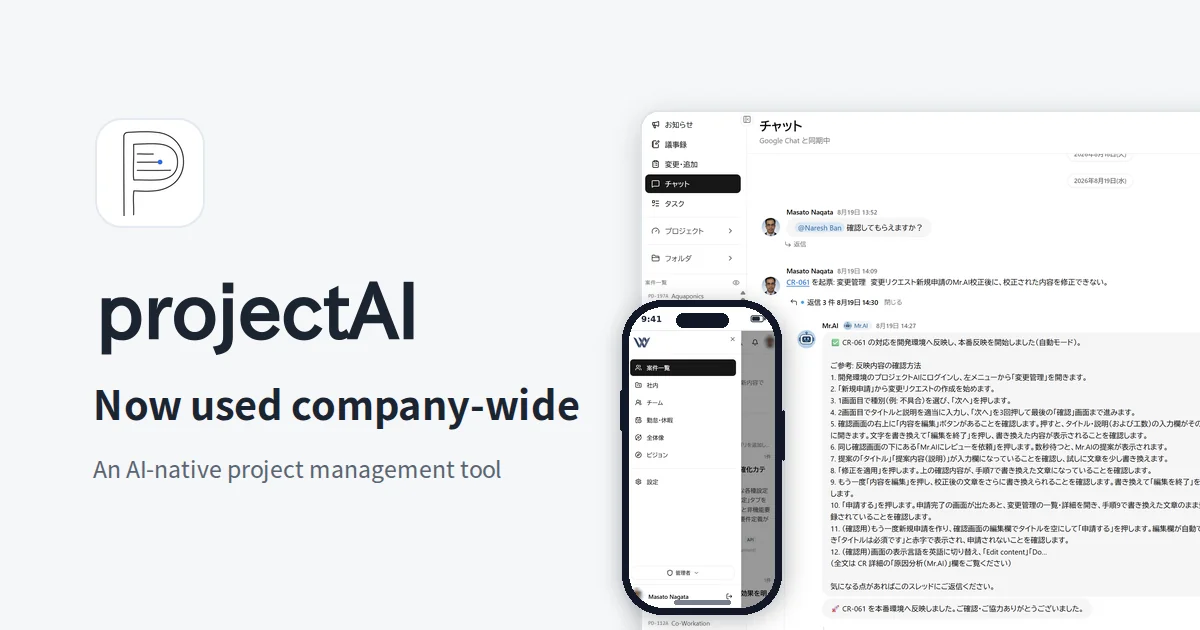
Company-Wide Operations of projectAI, Our In-House Tool with AI at the Core of Business Processes
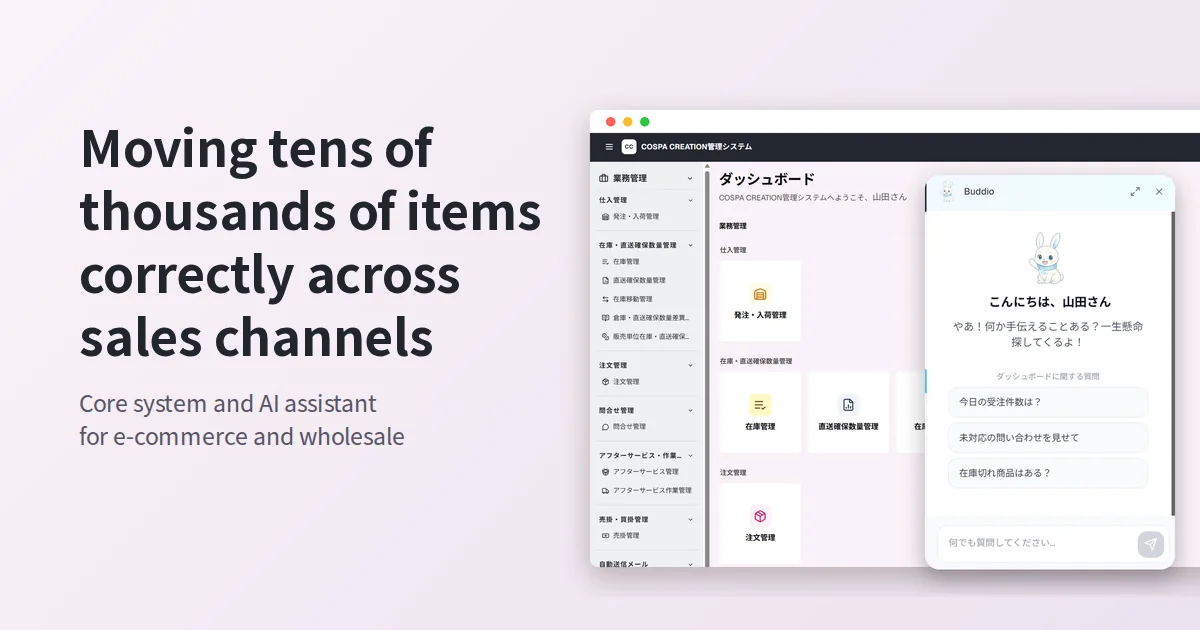
A Core Business System and the Buddio AI Assistant for a Furniture and Interior Wholesaler
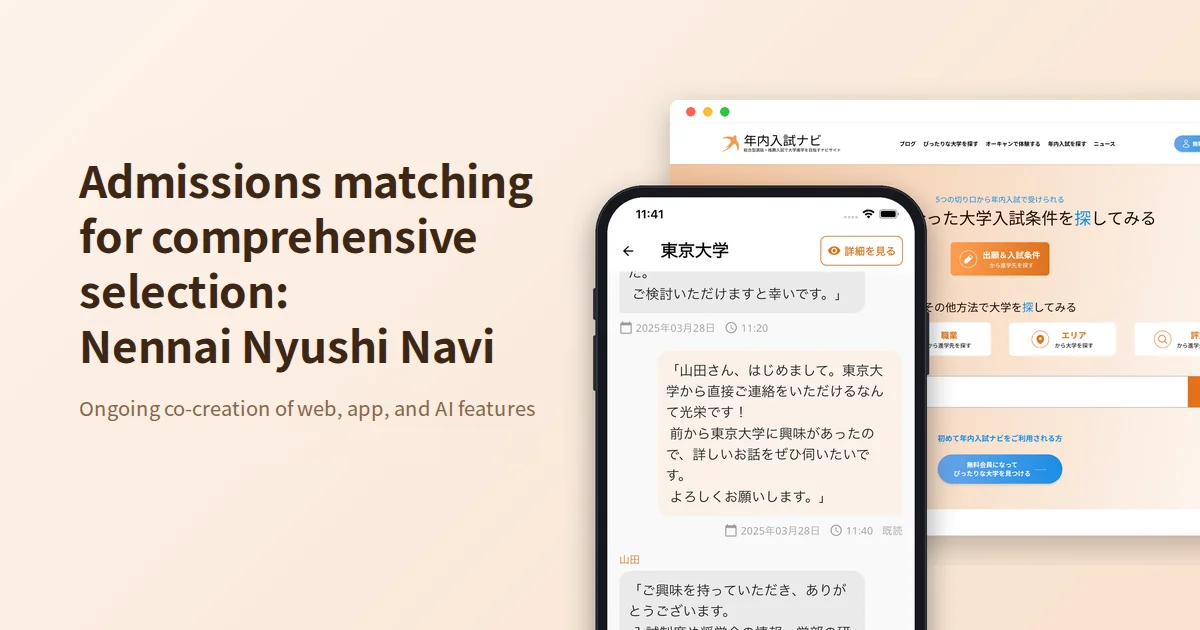
AI Feature Development for Nennai Nyushi Navi, a Matching Service for Comprehensive Selection and Recommendation Admissions
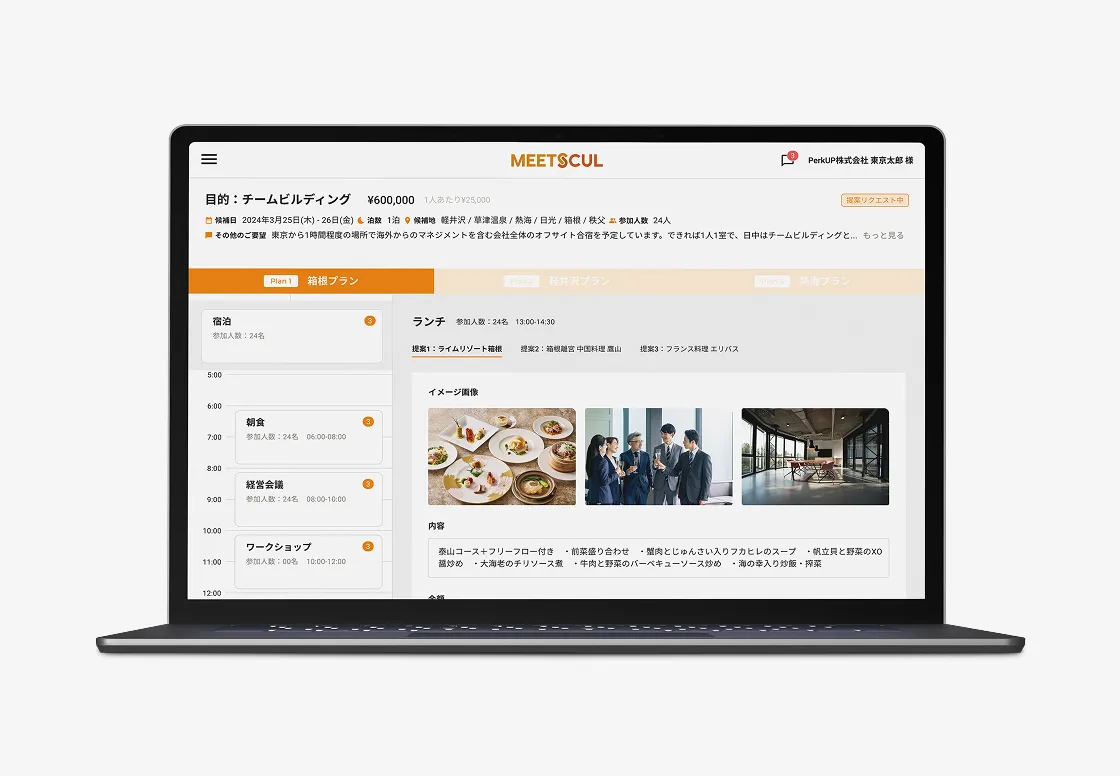
MEETSCUL: An AI Matching Platform Connecting Regions and Companies
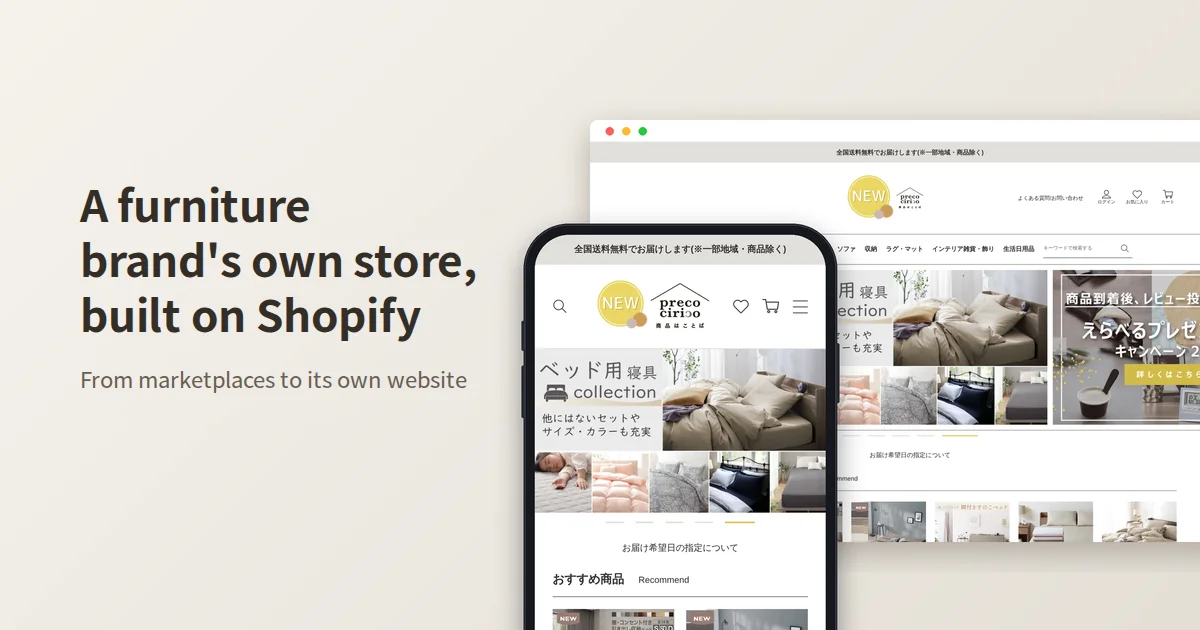
A Direct-to-Consumer Furniture E-commerce Site with AI Support, Built on Shopify
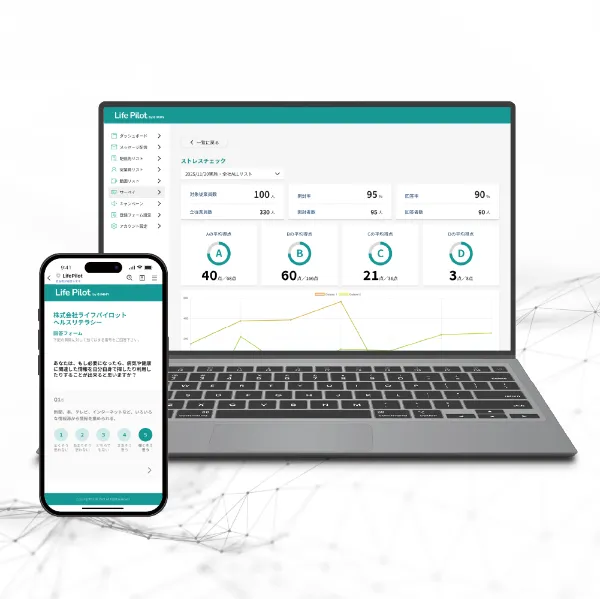
Life Pilot: A Platform Supporting Corporate Health and Productivity Management