
POC / MVP DEVELOPMENT
MVP and PoC Development
We are a development company that co-develops MVPs (minimum viable products) and PoCs (proofs of concept) for new businesses. We narrow your business hypothesis down to one and build only the scope needed to validate it, to a quality that reaches users. Whether it is a startup’s new service or a new initiative within an existing business, we work with you from the point of deciding what to build. We take you to the point where you can decide your next step based on the validation results.
CONSULTATIONS
Concerns We Often Hear When Launching a New Business
We hear from clients both right after a plan is approved and after they have already started collecting estimates. The most common concern is “we cannot decide the scope of the first step.” Trouble comes not from the technology but from starting to build before deciding what to test.
Scope and Estimates
What to build, and how far to go, is not getting decided internally
Our Approach
The plan was approved, but the scope of the first step is still undecided. As each stakeholder lists the features they consider necessary, the scope grows beyond what was originally assumed. Narrowing the scope gets harder the more people take part.
We settle on one hypothesis to validate and choose features by working backward from it. Anything that is merely “nice to have” is dropped. Naming one person as the decision maker keeps things moving.
Estimates were requested from three companies, and the amounts differed several-fold
Our Approach
Even when you believe you made the same request, the scope that the word “MVP” (minimum viable product) refers to differs depending on who writes the estimate. The number of screens, the types of users, integration with external systems, data migration, supported devices, and the setup for operations after launch: the amount changes greatly depending on how much of this is included.
Before comparing amounts, we align the assumptions each company has made. Before we prepare our estimate, we go through these six points with you.
Validation and Decisions
Built small, it resonated with no one
Our Approach
If “minimum” is understood as building a finished product smaller and cheaper, the result is a half-finished product that is just the full version with features cut. If you skimp on the usability of the part at the core of the hypothesis, the hypothesis itself can no longer be validated.
We build only the scope needed for validation, to a quality that reaches users. We boldly drop the parts we will not build, and we do not cut corners on the parts we keep.
The pilot rollout was a success, but it stopped there
Our Approach
Whether something can be built technically and whether the people doing the work will keep using it are separate questions. If the question being validated leans toward the technical side, nothing is left to inform the business decision. Many projects that stall at the PoC (proof of concept) stage trace back to the direction of the question set at the outset.
We choose based on whichever uncertainty is greatest right now: a PoC if the technology is uncertain, or an MVP (minimum viable product) if the viability of the business is uncertain. You do not need to do all three, one after another.
The product launched, but the results cannot be judged
Our Approach
If you have not decided in advance what counts as success, you end up fitting your interpretation to whatever numbers appear after launch. We often see cases where the measurement mechanism was dropped from the scope, leaving people saying, “It feels like it is being used, but we have no numbers.”
We set the success criteria in advance as a target number, a deadline, and a sample size, and include the mechanism for measuring them in the scope from the start. At the decision meeting, we do not shift the criteria after the fact.
REASONS
3 Reasons Clients Choose Us as a PoC/MVP Co-Development Partner
We Can Propose Reducing Features
When choosing an outsourcing partner for MVP development, one thing worth checking is whether they can propose reducing features. We believe our role is not to build exactly what we are told, but to respond with a question: “Is that needed for this round of validation?” We put aside the client-and-vendor relationship and work with you from the point of deciding what to validate. Deciding how far to narrow the scope only works when both sides are at the table: you, who know how your business can win, and we, who can judge what the implementation will take.
01
We Build It and Use It Ourselves
We built our own business tool, “projectAI,” in about 4.5 months, and we use its 73 screens and 31 AI features internally on a daily basis. We also developed “cockpit,” which runs multiple AI agents together, in-house. This gives us a sense of what happens after launch, which contract development alone cannot provide.
02
The Same Team Through Post-Release Improvements
After the product passes validation, the question is what to rebuild and what to keep. Because we can handle everything from requirements definition through design, development, and post-release operations, we can build on the assets from the validation stage and grow the product in stages. Because the people in charge do not change, the reasons it was built the way it was are not lost. This reduces the risk of rebuilding.
03
SCOPE
Types of Development We Handle and the Scope Our Estimates Cover
When outsourcing MVP development, one thing worth confirming is how far the vendor’s responsibility extends. We handle everything from requirements definition through post-launch operations, end to end.
Web Applications
Services that run in the browser. This is the most common form in MVP development for new businesses. We design the user-facing screens together with the admin screens for the people who run the service.
Smartphone Apps
We develop apps for iOS and Android. At the validation stage, we sometimes propose testing on the web first and building the app only once it becomes necessary.
SaaS and Business Systems
We develop both SaaS offered to outside customers and business systems used internally. We also handle cases that require integration with an existing core business system.
Embedding AI Features
Natural-language search, automatic document generation, data analysis, and more. We handle the production operations of AI in our own products, and we can bring that know-how straight to your project.
What Our Estimates Include
- Requirements clarification and hypothesis articulation
- UI/UX design
- Design, development, and testing
- Cloud architecture design and setup
- Post-launch operations and handover
We also provide in writing, at the time of the estimate, how spec changes are handled and the scope of maintenance. This is so that assumptions do not diverge later.
Decide on One Hypothesis to Validate
We narrow it down until “who has what problem, and how it will be solved” can be written in one sentence. At the same time, we decide what would count as success in a form that cannot be read two ways later. We set the target number, the deadline, and even the sample size up front. Without this standard, the discussion after launch ends at “it is being used reasonably well.”
Before we build, we decide what to test
Select Only the Scope Needed for Validation
We list the features that have come up and ask, one by one, “Would we be unable to validate the hypothesis without this?” Anything that is merely “nice to have” is dropped. We do this work together with you: the vendor alone misses the business intent, and the client alone lacks a view of how much implementation is involved. The mechanism for measuring the success criteria is included in this scope as well.
What we cut is scope, not quality
Build It So You Can Throw It Away Later
We value building in a way that lets you change direction as much as we value speed. For parts that remain usable after a change of direction, such as authentication and data storage, we use existing mechanisms, while the part at the core of the hypothesis is separated on the assumption that it will be rebuilt. We set up a structure in which you see a working product at least once a week and make decisions on the spot.
To keep “we already built it” out of the decision
Put It in the Hands of Real Users
We do not stop at internal testing. People inside the company already know the context, so they can end up using even a confusing screen. Even 10–20 people will show a trend. What matters more than the number of people is whether they are truly the users you have in mind. We look at both the numbers and the moments where users got stuck.
The numbers tell you what happened; the moments tell you why
Decide to Continue, Change, or Stop
We judge against the criteria set at the start. The key is not to shift the criteria after the fact. Even when you continue, we decide what to validate next before moving forward. If you move on to detailed build-out without deciding this, everything after that becomes development without a hypothesis. If you proceed to full-scale development, we work with you through the design of what to rebuild.
The ability to decide to stop is the value of this approach
FOR & PRICING
How to Think About MVP Development Cost and Duration
Even in publicly available information, the cost of PoC and MVP development ranges from several hundred thousand yen to more than ¥10,000,000. This is not because the estimates are sloppy, but because the scope that the word “MVP” refers to differs from project to project. Before giving an amount, we explain what determines it.
SCOPE
What Drives the Estimate
Even for the same “MVP,” the amount can change several-fold depending on how the scope is set
- Number of screens
- Types of users (end users only, or also administrators and approvers)
- Integration with external systems (such as payments, authentication, and existing core business systems)
- Whether existing data needs to be migrated
- Devices to support (web only, or smartphone apps as well)
- Who handles operations after launch
When you consult us, we go through these six points with you before preparing an estimate. The same goes when you compare estimates from different companies: align these assumptions before looking at the amounts, and you can judge them properly.
DURATION
Typical Duration
With a narrowed scope, several weeks to about 3 months
- Decide on one hypothesis: 1–2 weeks
- Select the scope: 1–2 weeks
- Build: several weeks to 3 months
- Put it in users’ hands: 2–4 weeks
- Make the decision: 1 week
The main thing that stretches the schedule is not the amount of implementation but the waiting time while specifications remain undecided. Time spent working out the ideal form pays off in the deliverables, but waiting in line for approval produces nothing. From the start, we work with you to set up a structure in which decisions can be made once a week.
Start with a Free Consultation to Sort Out What to Test
It is fine if you are still at the planning stage or have already started collecting estimates. We will help from the very first step of narrowing down the scope together.
Get a Free ConsultationTRACK RECORD
Our Development Track Record in MVPs and New Businesses
FAQ
Frequently Asked Questions
Here are the questions we are asked most often before a consultation. Please feel free to ask about anything not covered here.
Which should we do first, a PoC or an MVP?
It depends on which side holds the biggest uncertainty right now. If the technical uncertainty is large, such as whether AI can read handwritten slips or whether data can be extracted from your existing core business system, start with a PoC (proof of concept). If the technology is not in question and what you do not know is whether it can work as a business at all, start with an MVP (minimum viable product). You do not need to do all three, one after another.
What is the difference between an MVP and a prototype?
A prototype is a trial build for internal stakeholders to check the look of the product and the flow of use, and it may not actually work. An MVP (minimum viable product) is a product that real users use, built to a quality at which its value reaches them. Put very briefly, a PoC (proof of concept) tests “can it be built,” a prototype tests “can it be used,” and an MVP tests “will it be used.”
How long does it take?
If the scope has been narrowed down, several weeks to about 3 months is one rough guide. The breakdown is 1–2 weeks to decide on one hypothesis, 1–2 weeks to select the scope, several weeks to 3 months to build, 2–4 weeks to put it in users’ hands, and about 1 week to make the decision. The main thing that stretches the schedule is not the amount of implementation but the waiting time while specifications remain undecided. From the start, we work with you to set up a structure in which you see a working product at least once a week and can decide on the spot.
How much does it cost?
Because the cost varies greatly depending on how the scope is set, we do not quote an amount up front. The number of screens, the types of users, integration with external systems, whether existing data needs to be migrated, the devices to support, and who handles operations after launch: we go through these six points with you before preparing an estimate. There is no charge at the consultation stage.
Why do estimates differ so much from company to company?
It is because the scope that the word “MVP” (minimum viable product) refers to differs from company to company. Even in publicly available information, the same “no-code MVP development” is listed at ¥100,000 in some articles and ¥5,000,000 in others. It is not that one of them is wrong; the scope they include is different. When comparing, you can judge them properly if you align the assumptions on the six points above before looking at the amounts.
Can we proceed even if we have no engineers in-house?
Yes, you can. We take on the technical decisions. However, the decision about what to validate stays with the business side. If you leave even that to us, the project may move forward while drifting away from what you wanted to confirm. We work with you on the premise that you take part in the sessions where the hypothesis is decided.
Can we still talk with you if we already have a requirements definition document?
Yes, you can. In that case, we start by listing the features in the document and checking, one by one, “Would we be unable to validate the hypothesis without this?” A requirements definition document is often a collection of stakeholders’ requests, and it is usually larger than the scope needed for validation.
Can what is built as an MVP be used as is in production?
In some cases it can be used as is, and in others it needs to be rebuilt. Because an MVP (minimum viable product) exists for validation, preparation for user growth and for how little downtime can be tolerated is often kept to a minimum. We build in a way that lets you change direction, and for parts that remain usable after a change of direction, such as authentication and data storage, we use existing mechanisms. After the MVP passes validation, we work with you through the design of what to keep and what to rebuild.
Can you handle cases that require integration with existing systems?
Yes, we can. However, each additional system to integrate with adds specification checks and exception handling. Please let us confirm together, at the stage where the scope is decided, whether that integration is truly needed for the hypothesis you want to validate. At the validation stage, we sometimes substitute manual work for the integration and then build the integration ahead of production.
Can we commission only the development work?
Yes, you can. However, the stage where we add the most value is deciding together what to validate. We also accept requests for implementation only, with the specifications already fixed, but in that case we would be “building what we are told” and cannot fulfill the role of narrowing the scope. Please tell us which approach you would prefer.
What types of development do you handle?
We handle web applications, smartphone apps, SaaS for external customers, and internal business systems. We also design the embedding of AI features based on what we have learned from the production operations of AI in our own products. At the validation stage, we sometimes propose testing on the web first and building the app only once it becomes necessary.
Can you also handle maintenance and improvements after release?
Yes, we can. We are set up to handle everything from requirements definition through design, development, and post-launch operations. Rebuilding after validation can also continue directly with the same team. We provide the scope of maintenance and how spec changes are handled in writing at the time of the estimate.
Is it okay if the validation leads us to decide to stop?
Yes, that is fine. In fact, the goal is to be able to make that decision early. That is why we keep the initial investment small. Even when you continue, we decide what to validate next before moving forward. If you move on to detailed build-out without deciding this, everything after that ends up as development without a hypothesis.
CASE STUDIES
Related Case Studies
MVP Development of a Q&A Service with a New Revenue Model
SOUDAN: A Video Consultation Marketplace That Bills by Call Time
An Agent Collaboration Platform Connecting Recruitment Agencies and Job Openings
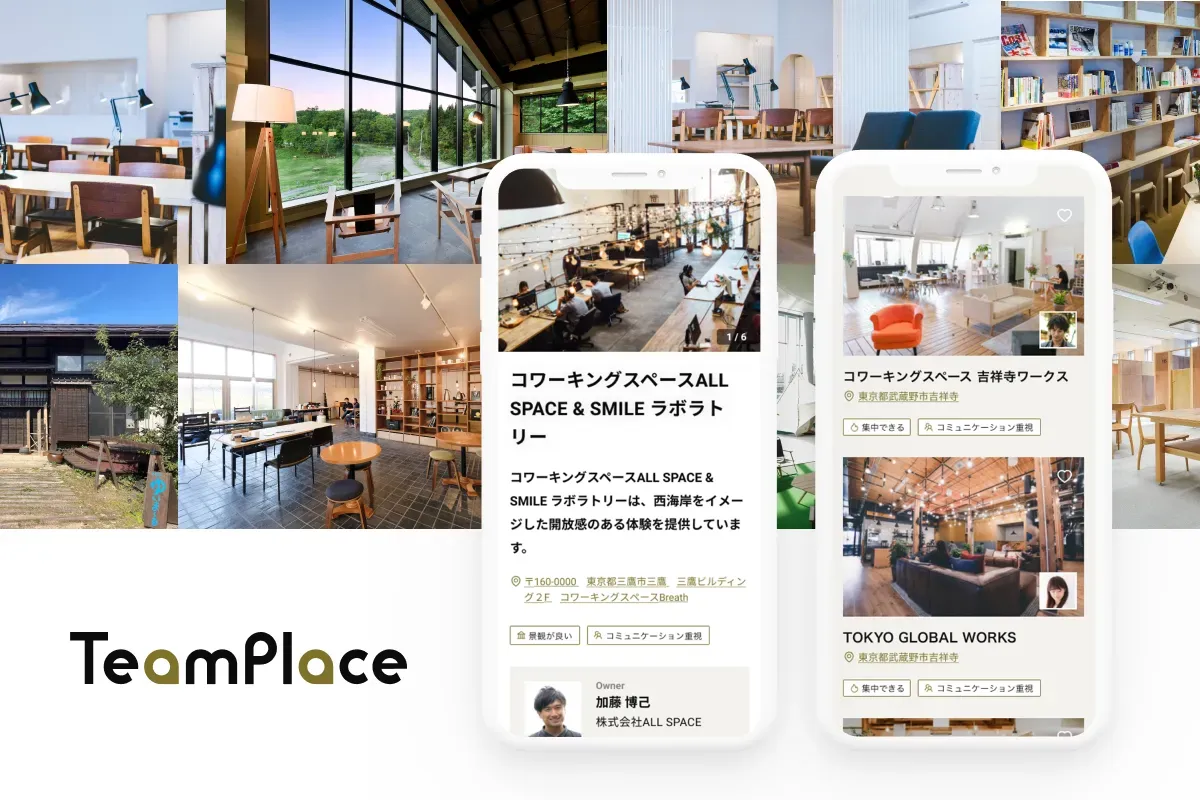
TeamPlace®: A Subscription Platform for Workspaces
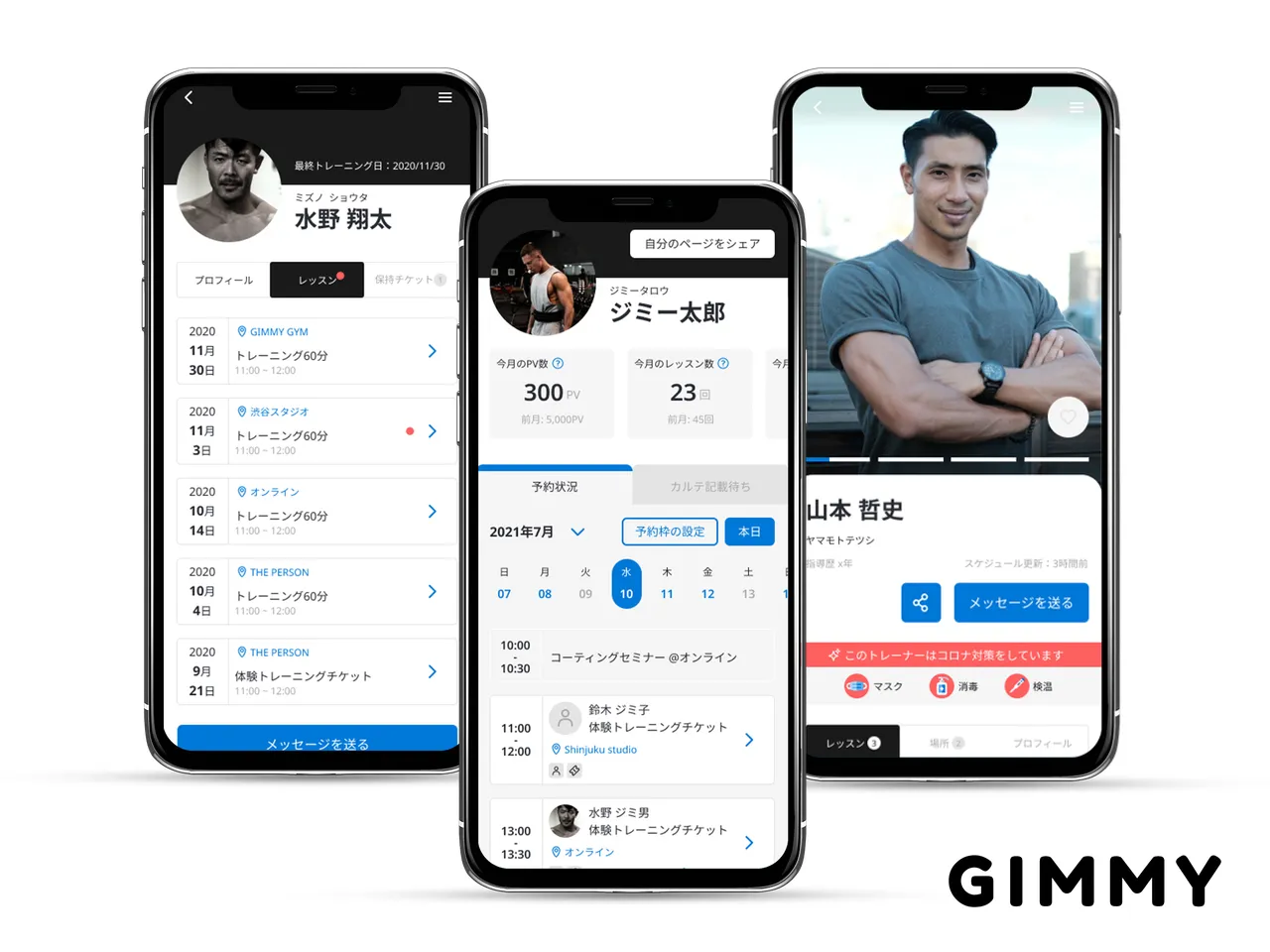
GIMMY: A Platform Supporting the Business of Personal Trainers
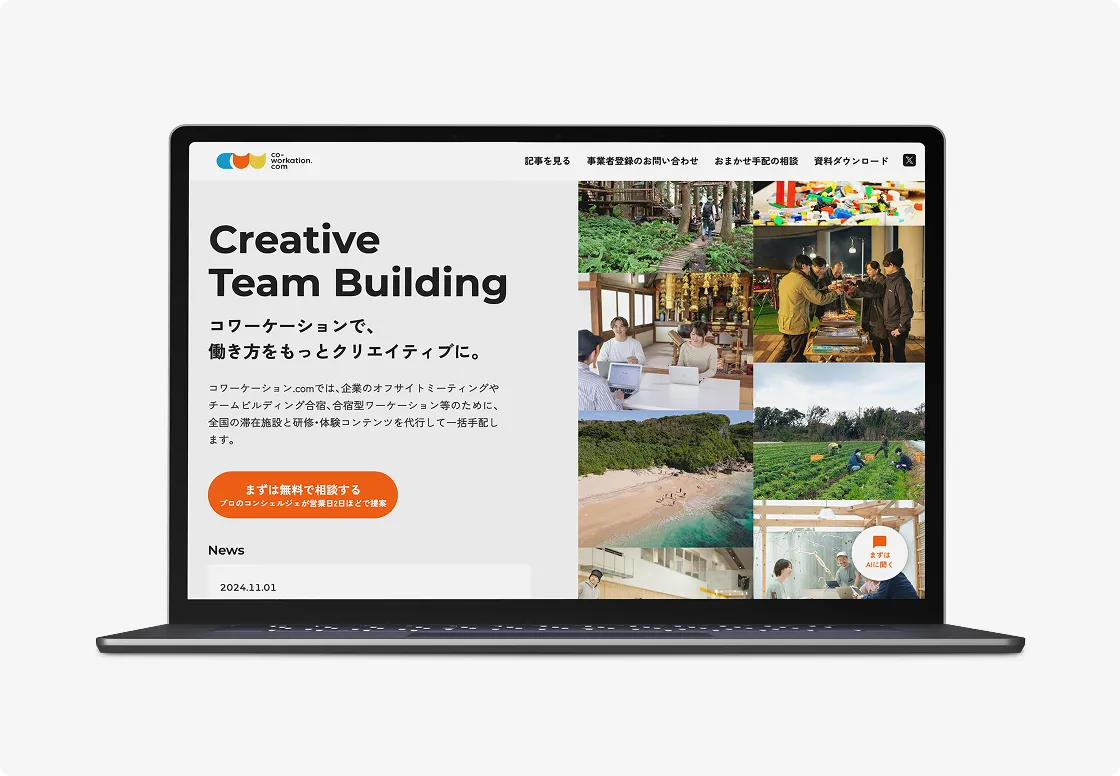
Co-Workation: Transforming the Work Environment Beyond the Office